Office Cleaning Cost in Vancouver: What You Should Pay in 2026
If you are looking for office cleaning in Vancouver, one of the first questions you probably have is:
How much should I actually be paying for office cleaning in 2026?
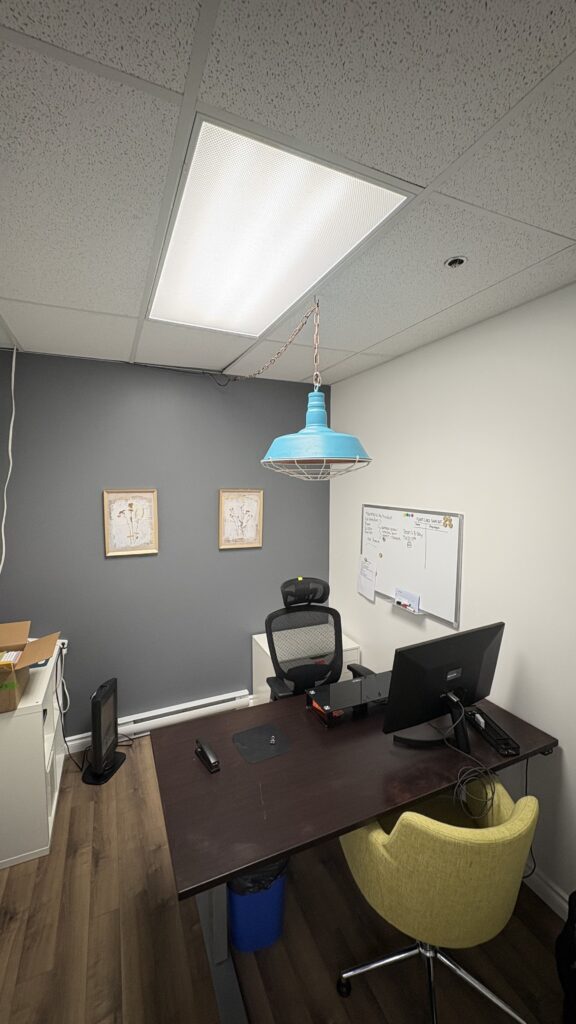
The short answer is that a typical office can cost anywhere from a couple hundred dollars per month to well over a thousand, depending on the size of the space, how often it is cleaned and, perhaps most importantly, how difficult the office actually is to maintain.
There are general pricing benchmarks that can help you understand whether a quote is in the right ballpark. For a standard recurring office cleaning service, approximately $0.10 to $0.25 per square foot per cleaning is a reasonable starting benchmark in Vancouver.
But I would not recommend choosing a cleaning company based on that number alone.
In fact, if you are getting quotes for your office, I would probably ask the cleaning company to quote the job in estimated labour hours and provide a breakdown of where those hours are going.
That can tell you a lot more than simply being told:
“$0.18 per square foot.”
Why Price Per Square Foot Can Be Misleading
Square footage is obviously important.
A 1,000-square-foot office is generally going to require less work than a 10,000-square-foot office.
But the problem is that square footage does not tell you what is actually happening inside that space.
Imagine two offices that are both 3,000 square feet.
One is a quiet corporate office with 15 employees, mostly carpeted floors and relatively little foot traffic.
The other belongs to a construction company where employees regularly return from job sites carrying dust, mud, sawdust and other debris into the office.
They are both 3,000 square feet.
They should not necessarily cost the same to clean.
This is why I think there is a lot of value in asking a cleaning company to explain the labour estimate behind the price.
Ask for an Hourly Labour Estimate
Instead of only asking:
“How much do you charge per square foot?”
ask something like:
“How many labour hours do you estimate this office will require per cleaning, and can you give me a breakdown of where that time is going?”
That is a much more useful question.
For example, a cleaning company might estimate something like this:
| Area / Task | Estimated Labour Time |
|---|---|
| Open office and work areas | 1.5 hours |
| Kitchen / breakroom | 0.75 hours |
| Washrooms | 0.75 hours |
| Entrance and common areas | 0.50 hours |
| Meeting rooms | 0.50 hours |
| Garbage and recycling | 0.25 hours |
| Final inspection / touch-ups | 0.25 hours |
| Estimated total | 4.5 hours |
Now you actually have something you can evaluate.
You can look at the office and ask yourself:
Does 1.5 hours for the office areas make sense?
Is 45 minutes enough for our kitchen?
Why are they estimating 45 minutes for the washrooms?
You may not know the exact answer, but at least you have a basis for discussing the quote.
What Gets Us Really Excited About This Approach
What gets us really excited about this approach is that it makes the cleaning quote much more transparent.
Instead of treating cleaning as some mysterious number that appears at the bottom of an invoice, you can understand what the company believes it will actually take to clean your workplace.
And surprisingly, this can also explain why two companies can give you very different prices.
Imagine one company estimates that your office requires four labour hours per visit.
Another estimates seven.
Now you have a very different conversation.
You can ask:
“Why do you think it requires seven hours?”
Maybe the second company noticed that you have heavily trafficked tile floors that require additional attention.
Maybe they are including a much more detailed kitchen cleaning.
Maybe they are cleaning inside meeting rooms that the first company excluded.
Maybe they are simply estimating too much time.
The point is that you can ask.
Labour Hours Also Make Hourly Pricing Easier to Understand
Suppose a cleaning company tells you they charge $45 per labour hour and estimates that your office will require five labour hours per visit.
That gives you:
5 hours × $45 = $225 per visit
If you need cleaning twice a week, you are looking at approximately:
$450 per week
or roughly:
$1,800 per four-week month
Now you can compare that against another company.
Perhaps another company charges $55 per labour hour but estimates only four hours.
That would be:
4 × $55 = $220 per visit
Despite having a higher hourly rate, the second company is actually cheaper per visit.
This is why looking only at the hourly rate can also be misleading.
The more useful number is:
Estimated labour hours × hourly rate = estimated cleaning cost per visit.
But Make Sure You Understand “Labour Hours”

There is one important detail here.
If a company says:
“The cleaning will take two hours.”
Ask whether they mean two clock hours with one cleaner or two total labour hours.
Those are not the same thing.
For example:
Two cleaners working for two hours equals:
4 labour hours.
One cleaner working for two hours equals:
2 labour hours.
This distinction can create a lot of confusion when comparing quotes.
A good quote should make this clear.
Square Footage Still Matters
This does not mean you should completely ignore square footage.
It is still an important benchmark.
For standard recurring office cleaning in Vancouver, a rough starting point of around $0.10 to $0.25 per square foot per cleaning can help you determine whether a quote appears broadly reasonable.
For example, a 3,000-square-foot office at $0.15 per square foot would be:
3,000 × $0.15 = $450 per cleaning.
At $0.20:
3,000 × $0.20 = $600 per cleaning.
That gives you a useful reference point.
But the labour estimate tells you why the company is charging that amount.
That is the part I would pay more attention to.
The Type of Office Can Change the Labour Estimate
This is where the labour breakdown becomes particularly useful.
Let’s say you operate a 3,000-square-foot corporate office.
The cleaning company estimates:
4 labour hours per visit.
That might make sense if the office is relatively clean, mostly carpeted and has low traffic.
Now imagine you tell them:
“Actually, this is a contractor’s office. Employees are coming back from construction sites throughout the day and bringing a lot of dirt and dust inside.”
Suddenly, the cleaning company may estimate more time for the floors and entrance areas.
That is not necessarily an arbitrary price increase.
There is simply more work involved.
Flooring Should Be Included in the Estimate
I would also ask the cleaning company to identify how much time they are allocating to your flooring.
This becomes particularly important if you have tile.
Tile can be deceptively labour-intensive, especially when there is heavy foot traffic.
Dirt can accumulate around grout lines and textured areas, and a quick pass with a mop may not be enough to properly maintain the appearance of the floor.
If your office has a large tiled entrance or kitchen, ask whether the labour estimate accounts for that.
The same applies if you have concrete, vinyl, laminate or other hard surfaces that require particular maintenance.
And if you require machine scrubbing, carpet extraction, floor stripping, waxing or other specialized floor care, those services should be clearly identified rather than quietly buried inside a generic “office cleaning” price.
Ask for the Kitchen to Be Broken Out
The same idea applies to the kitchen.
If you have a small kitchen that employees barely use, it may only require a relatively small amount of time.
If you have a busy employee kitchen that is used throughout the day, the cleaning company may need considerably longer.
Ask them to show you the estimate.
For example:
| Area | Estimated Time |
|---|---|
| Kitchen / breakroom | 45 minutes |
| Washrooms | 60 minutes |
| Office areas | 90 minutes |
| Floors / entrance | 60 minutes |
| Garbage / recycling | 15 minutes |
| Total | 4 hours |
Now you can have a real conversation about the quote.
If you think the kitchen is being overestimated, ask why.
If you think the floors are being underestimated, point that out.
That is much more productive than simply saying:
“Your price is too high.”
Cleaning Frequency Still Matters
Once you have an estimated labour requirement per visit, frequency becomes much easier to understand.
Suppose your office requires four labour hours per cleaning.
If you clean once per week:
4 labour hours × 1 visit = 4 labour hours per week.
If you clean three times per week:
4 × 3 = 12 labour hours per week.
If you clean five days per week:
4 × 5 = 20 labour hours per week.
Now you can understand where the monthly price is coming from.
It also gives you a chance to decide whether you actually need that frequency.
Do You Need Daily Cleaning?
Not necessarily.
If your office has six employees and low traffic, you may not need cleaners five days a week.
If you have 60 employees, multiple washrooms, a heavily used kitchen and customers constantly coming through the door, daily cleaning may make much more sense.
The right frequency depends on the standard you want to maintain and how quickly the workplace becomes dirty.
What About Cleaning Supplies?
Another thing to ask about is who provides the cleaning equipment and supplies.
If the cleaning company brings everything, the price will need to account for those costs.
If you have a secure janitorial closet and are willing to let the company keep its vacuum, mop system, chemicals and other equipment onsite, that can make the operation more efficient because the cleaners do not have to transport everything in and out on every visit.
By the way, this does not mean you should expect a massive discount simply because you have a storage closet.
Labour is still the biggest cost.
But removing unnecessary logistics can help, particularly with a recurring contract.
Make sure the agreement also clearly states who is responsible for cleaning products and consumables such as toilet paper, paper towels and hand soap.
What About the Initial Cleaning?
If your office has not been properly cleaned for a long time, ask the company whether the estimate is for maintenance cleaning or an initial deep clean.
Those are two very different things.
A maintenance visit assumes the property is already reasonably clean and the cleaner is maintaining it.
An initial deep clean may involve significant buildup on floors, kitchen surfaces, washrooms and other areas.
It would be perfectly reasonable for the first service to require substantially more labour than subsequent visits.
What I Would Ask a Cleaning Company to Include in the Quote
If I were requesting quotes for an office, I would ask each company for the following:
1. Estimated labour hours per visit
2. Number of cleaners
3. Estimated clock time onsite
4. Hourly labour rate
5. Total estimated cost per visit
6. Cleaning frequency
7. A breakdown of estimated time by area
For example:
| Area | Estimated Labour |
|---|---|
| Office / work areas | 1.5 hours |
| Kitchen | 0.75 hours |
| Washrooms | 0.75 hours |
| Tile / hard floors | 0.75 hours |
| Entrance / common areas | 0.50 hours |
| Garbage and recycling | 0.25 hours |
| Total | 4.5 hours |
You do not necessarily need a breakdown this detailed for every tiny task, but having the major areas identified can make the quote much easier to understand.
This Is Better Than Comparing “Price Per Square Foot” Alone
The square-foot price is useful as a benchmark.
I would still use it.
But I would not make it the primary way of choosing a cleaning company.
If one company says:
“$0.15 per square foot.”
and another says:
“$0.22 per square foot.”
you still don’t know enough.
But if the first company says:
“We estimate four labour hours per visit at $45 per labour hour.”
and the second says:
“We estimate six labour hours per visit at $50 per labour hour.”
now you have something meaningful to compare.
You can ask why the second company believes the job takes two additional hours.
Maybe their scope is better.
Maybe they noticed things the first company missed.
Maybe they are inefficient.
Maybe your office actually needs the additional labour.
That is the conversation you want to have.
The Bottom Line
If you are trying to figure out what office cleaning should cost in Vancouver in 2026, use square-foot pricing as a benchmark, not as the entire answer.
For a standard office, roughly $0.10 to $0.25 per square foot per cleaning is a useful starting range, but your actual price can change substantially depending on the type of business, traffic, flooring, frequency, kitchen usage, condition of the office and other requirements.
And if you are currently getting quotes, here is probably the biggest piece of advice I would give you:
Ask the cleaning company to estimate the labour hours and show you how they are allocating that time.
A table showing something like “office areas: 1.5 hours, kitchen: 45 minutes, washrooms: 45 minutes, floors: 1 hour” can be far more explanatory than simply seeing “$0.18 per square foot” on a proposal.
It lets you understand what you are actually paying for, compare different companies more fairly and, perhaps most importantly, have an intelligent conversation with the cleaner if you think the estimate is too high or too low.
Because ultimately, the question is not really:
“What does office cleaning cost per square foot?”
The better question is:
“How many labour hours does it realistically take to clean my office properly, and what am I paying for those hours?”